EV Homologation Services for Electric Vehicle Certification
The Indian car market is moving fast toward green transport. For makers, it’s key to know the law well to get into the market. Getting to know EV homologation is the first step to a legal business in this tough field.
Groups like MoRTH, ARAI, and ICAT make sure cars are safe and work well. They check every car to make sure it meets tough rules. Getting the right electric vehicle certification is more than a law; it’s a promise to keep drivers safe.
This guide makes it easier for companies to bring new cars to the market. By getting the hang of electric vehicle certification, you can dodge expensive hold-ups. Right EV homologation means your cars are ready for the future.
Key Takeaways
- Understand the critical role of MoRTH, ARAI, and ICAT in the Indian market.
- Learn why compliance is a legal necessity for all new vehicle models.
- Identify the safety and performance benchmarks required for market entry.
- Simplify the complex documentation process for faster product approval.
- Ensure your business remains competitive by meeting 2026 regulatory standards.
Understanding the Regulatory Framework for Electric Vehicles
To launch electric vehicles in India, you need to know the rules well. The rules ensure safety, performance, and protect the environment. Getting EV homologation is the first step to enter the Indian market.
Role of the Ministry of Road Transport and Highways
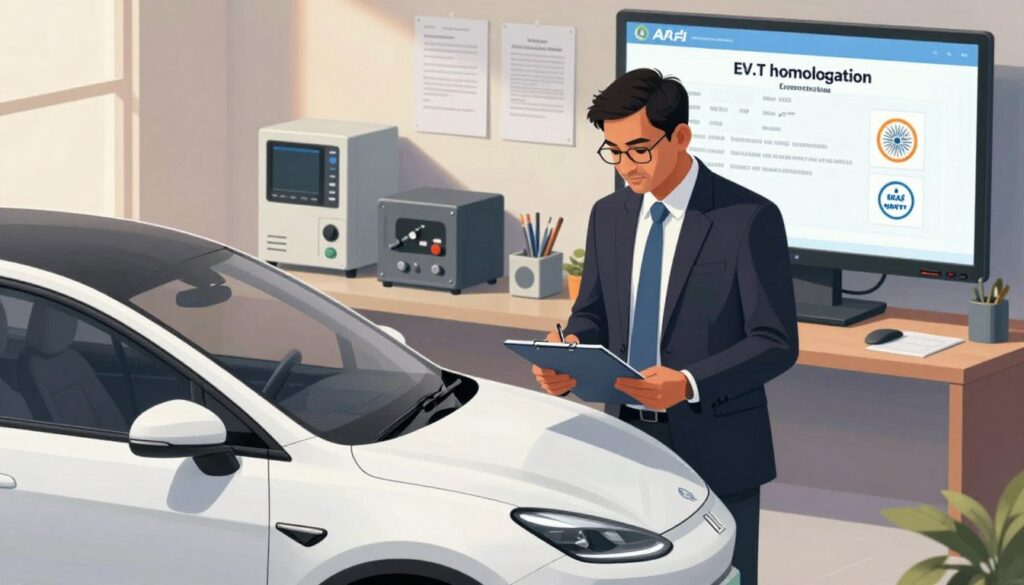
The Ministry of Road Transport and Highways (MoRTH) leads the automotive sector in India. It makes policies and safety standards for vehicles. This ensures all electric vehicle certification is fair and clear across the country.
MoRTH keeps its rules up-to-date with new tech in batteries and powertrains. Companies must watch these changes to stay in line. Not following these rules can cause big delays in launching products.
Distinguishing Between ARAI and ICAT Testing Centers
Testing centers check if vehicles meet MoRTH’s standards. The Automotive Research Association of India (ARAI) and the International Centre for Automotive Technology (ICAT) are key. They both help with EV homologation but focus on different areas.
Choosing the right center depends on the vehicle’s needs and where the company is based. Both centers have strict tests to make sure vehicles are ready for the road. Here’s a table showing what makes them different.
| Feature | ARAI | ICAT |
|---|---|---|
| Primary Focus | Comprehensive R&D and Testing | Advanced Automotive Technology |
| Location | Pune, Maharashtra | Manesar, Haryana |
| Core Expertise | Standardization and Safety | Innovation and Certification |
| Service Scope | Full Vehicle Homologation | Component and System Testing |
Importance of CMVR Compliance for Electric Mobility
Following the Central Motor Vehicle Rules (CMVR) is crucial for any company in India. These rules cover how vehicles are made, kept, and used. Getting electric vehicle certification means proving a vehicle meets these CMVR standards.
Following CMVR rules makes vehicles safe for everyone. It also helps companies avoid legal issues and recalls. By focusing on CMVR, companies show they care about quality and reliability in electric vehicles in India.
The Step-by-Step Process for EV Homologation
Getting new electric vehicles to market in India is a detailed process. It involves technical checks and official steps. Manufacturers must follow this path to meet safety and efficiency standards for Indian roads.
Initial Application and Prototype Submission
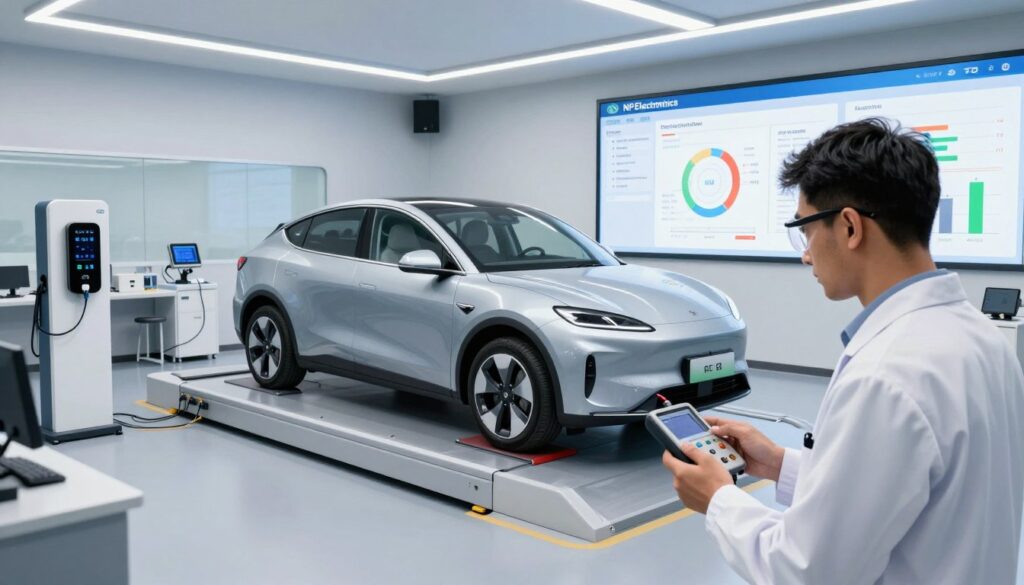
The first step is submitting technical documents and prototypes to a testing agency. Companies need to provide detailed drawings, component specs, and safety statements. Accuracy here is key, as mistakes can delay the EV homologation process.
Laboratory Testing and Performance Evaluation
After the application is accepted, the vehicle goes through lab tests. Engineers check battery, braking, and range to meet safety norms. This step usually takes 2 to 3 months for electric vehicle certification.
Granting of the Type Approval Certificate
Passing all tests, the agency gives a Type Approval Certificate. This proves the vehicle meets Central Motor Vehicles Rules (CMVR). Getting this certificate is a big step toward mass production and sales.
Conformity of Production Audits
After initial approval, ongoing compliance is checked through Conformity of Production (COP) audits. These audits ensure every vehicle meets the prototype specs. Consistent quality control keeps the electric vehicle certification valid.
| Stage | Primary Focus | Estimated Duration |
|---|---|---|
| Application | Documentation & Prototype | 2-4 Weeks |
| Testing | Safety & Performance | 8-12 Weeks |
| Certification | Final Approval Issuance | 2-3 Weeks |
| COP Audit | Ongoing Compliance | Periodic |
Technical Testing and Safety Standards for 2026
Technical precision is key for EV homologation in India’s fast-changing car world. Cars must pass tough safety tests to be reliable on roads. These tests help keep people safe and encourage new green energy ideas.
Battery Safety Standards Under AIS 156
The AIS 156 standard is top for battery safety in India. It checks for heat control, shock resistance, and short-circuit safety. It’s crucial that battery packs stay stable in extreme situations.
“Safety is not just a regulatory requirement; it is the cornerstone of consumer trust in the electric vehicle revolution.”
Tests include fire and water tests to ensure battery safety. These tests show the battery is safe for daily use and in accidents.
Electric Powertrain Performance Metrics
The powertrain also has to meet certain performance standards for electric vehicle certification. Tests check the motor’s power and efficiency under different loads. This ensures the car performs as promised.
Testing also looks at how far the car can go on a charge. Standard tests show how efficient the electric system is in real driving. Here’s what’s checked:
| Metric | Testing Focus | Primary Goal |
|---|---|---|
| Net Power Output | Continuous Power | Performance Validation |
| Range Efficiency | Drive Cycle Testing | Consumer Transparency |
| Thermal Stability | Cooling System | Operational Safety |
Electromagnetic Compatibility and Functional Safety
Today’s cars are like computers on wheels. That’s why EMC testing is crucial. It makes sure the car’s electronics don’t mess with other devices. Functional safety checks also ensure the car’s systems work right even when something goes wrong.
Meeting these high standards helps companies get their cars to market. Following these rules helps avoid recalls and builds a good name. These strict tests make electric cars a safe and smart choice for India’s future.
Documentation and Application Requirements
Getting your electric vehicle certification right means paying close attention to every detail. You need to make sure your application is clear and complete for agencies like ARAI or ICAT. Proper preparation helps avoid delays in the approval process.
Technical Specifications and Engineering Drawings
Your application starts with the technical details. You must include detailed engineering drawings. These should cover the chassis, battery pack, and powertrain.
You also need a Bill of Materials (BOM). This list should show the parts of your vehicle, like the motor and battery. Keeping these documents up to date is key for a smooth EV homologation process.
Declaration of Conformity and Manufacturer Credentials
Regulatory bodies need proof of your company’s legal status and manufacturing ability. You must provide a signed Declaration of Conformity. This shows your vehicle meets safety and quality standards.
- Valid ISO 9001 certification for manufacturing facilities.
- Proof of business registration and authorized signatory details.
- Detailed quality control manuals and testing protocols.
“Compliance is not merely a box-ticking exercise; it is the bedrock of consumer trust and long-term viability in the Indian electric mobility sector.”
Managing Test Reports and Certification Fees
Keeping track of your test reports is crucial. You’ll get interim reports that highlight any issues. Fixing these quickly helps avoid delays in getting your electric vehicle certification.
It’s also important to understand the cost of certification. Fees depend on the vehicle type, variants, and tests needed for EV homologation. Here’s a table showing the typical documents needed for a successful application.
| Document Category | Primary Purpose | Key Requirement |
|---|---|---|
| Engineering Data | Technical Validation | CAD Drawings & BOM |
| Legal Credentials | Company Verification | ISO & Registration |
| Compliance Forms | Regulatory Alignment | Signed Declarations |
| Financial Records | Fee Processing | Payment Receipts |
Navigating Challenges and Compliance Strategies
Understanding EV homologation is key for brands in India. The rules are clear, but challenges can slow things down. Being proactive helps your product hit the market smoothly.
Addressing Common Causes for Certification Delays
Many electric vehicle certification delays come from missing documents or small tech issues. If drawings don’t match the real thing, tests must pause. Precision is your greatest asset here.
- Inconsistent technical specs in different parts.
- Not having full test data for battery systems.
- Slow responses to testing center questions.
Strategies for Streamlining the Approval Workflow
Try pre-compliance testing at private labs before official approval. This finds safety or performance problems early. Fixing these at home saves time and money.
Also, use exemptions for low-speed electric vehicles. These vehicles have simpler tests, speeding up market entry. Knowing these rules can give you a big advantage.
Staying Updated with Evolving MoRTH Notifications
The rules for electric cars change often, with updates from the Ministry of Road Transport and Highways (MoRTH). Keeping up with these changes is crucial for electric vehicle certification. Using old info can lead to big problems.
It’s smart to have a team just for keeping up with these updates. By adding these changes to your plans, your EV homologation stays strong. Continuous vigilance is essential for success in India’s car market.
Conclusion
Understanding EV homologation is key for any car maker wanting to lead in India. This detailed process keeps everyone safe and sets high quality standards in the car world.
Following rules from the Automotive Research Association of India and the International Centre for Automotive Technology is crucial. It makes sure your cars meet the country’s needs. Staying focused on these rules helps build trust with customers.
Getting your electric vehicles certified is a smart move for growth. Companies that focus on these standards stand out in a busy market.
Working towards cleaner cars means being great at technology and following the law. By doing this, your brand helps make travel safer and more efficient for everyone.
Work with experts to keep up with new MoRTH rules. Your dedication to quality shapes the future of electric cars in India.
 Previous Post
 Next Post