
Electric Vehicle Prototype Development Services
The car world is changing fast as we move towards cleaner energy. Electric Vehicle Prototype Development is key to making this change real.
The Indian EV market is changing a lot. It needs top-notch engineering to meet local standards and what people want.
Companies can make a plan to go from idea to production. This plan is crucial for lasting success and helping sustainable mobility India grow.
Key Takeaways
- The move to cleaner transport needs thorough testing.
- Local engineering is important for adapting to different roads.
- A clear plan lowers risks from idea to production.
- Planning ahead keeps companies ahead in a fast-changing field.
- Innovative design is key to reaching national environmental goals.
Navigating the Landscape of Electric Vehicle Prototype Development
The move to green mobility is speeding up in the subcontinent. To succeed, companies must excel in Electric Vehicle Prototype Development. This is key for a big share in the Indian EV market.
The Current State of the Indian EV Ecosystem
India is seeing a big change. Startups and big names are turning to electric cars. The government’s FAME scheme helps with money and support for new ideas.
But, there are big technical challenges. Companies face EV design challenges like hot weather and rough roads. They need special solutions for these issues.
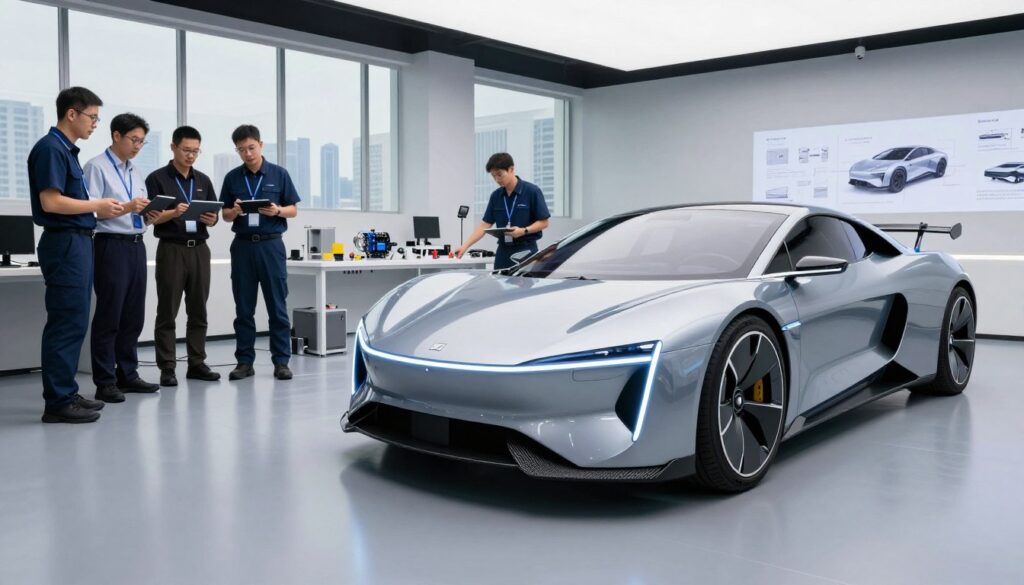
“The true test of an electric vehicle is not just its range on paper, but its ability to perform reliably under the demanding and unpredictable conditions of the Indian landscape.”
Defining the Scope and Objectives of a Prototype
Before making many cars, teams need a clear plan for their prototype. A good prototype is the cornerstone of the product’s life. It keeps engineering focused on what really matters.
To do well in Electric Vehicle Prototype Development, teams should focus on a few key things:
- Thermal Efficiency: Making battery cooling systems work well in hot weather.
- Structural Integrity: Creating a strong chassis for different roads.
- Energy Management: Using power wisely to meet real-world range needs.
By tackling these EV design challenges first, companies can save time in testing. A smart plan for the Indian EV market leads to a product that’s not just new but also strong and ready for sale.
Overcoming Battery Technology and Thermal Management Hurdles
The success of an electric vehicle prototype depends on its energy storage and thermal control. In India, where temperatures often rise high, battery thermal management is key. Engineers must find a balance between energy density and cooling to avoid damage.
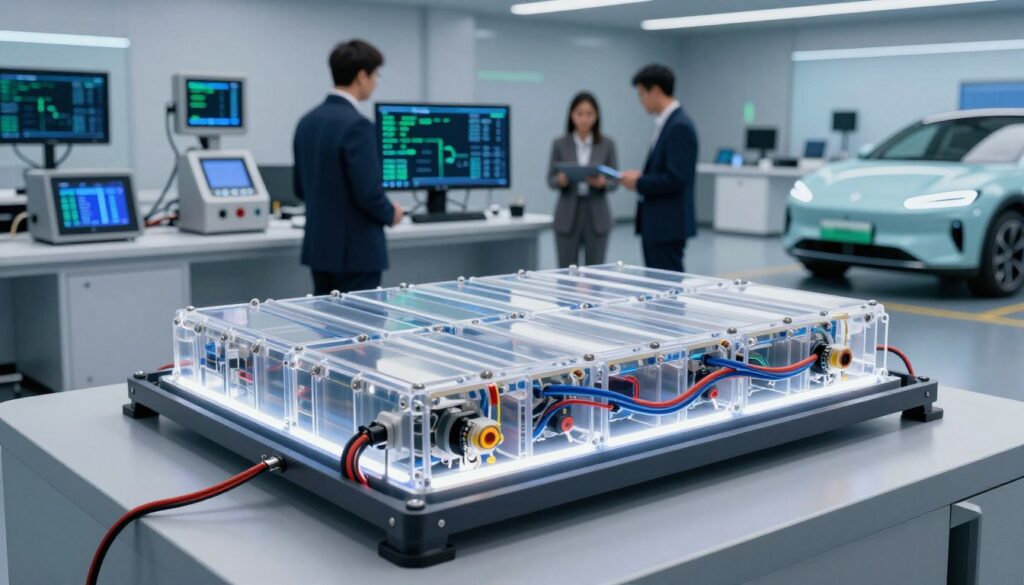
Sourcing Reliable Lithium-Ion Cells in India
Finding high-quality cells is a big challenge for local makers. The supply chain is growing, but checking suppliers is crucial. Quality control at the cell level is essential for the vehicle’s long-term health.
When picking cells, look for these key points for success:
- Cycle life consistency under high-temperature stress.
- Uniformity in internal resistance across all batches.
- Availability of comprehensive technical documentation and safety certifications.
Implementing Advanced Battery Management Systems
A smart Battery Management System (BMS) is the vehicle’s brain. It watches voltage, current, and temperature to improve performance. The BMS uses real-time data to keep cells safe.
| BMS Feature | Primary Function | Impact on Prototype |
|---|---|---|
| Cell Balancing | Equalizes charge levels | Extends pack lifespan |
| Thermal Monitoring | Tracks heat spikes | Prevents overheating |
| Data Logging | Records performance | Enables iterative design |
Safety Protocols for Thermal Runaway Prevention
Strong battery safety protocols are vital to avoid thermal runaway. These include design choices and software safeguards. Designers should focus on passive safety, like fire-resistant materials and vents, to manage failures.
“Safety is not a feature; it is the foundation upon which the entire electric mobility transition must be built.”
Engineers should use redundant sensors to cut power if needed. Proactive monitoring helps catch issues before they become serious. Following these strict standards makes prototypes ready for real-world use.
Supply Chain Constraints and Component Localization
Indian electric vehicle prototype developers face a big challenge: building a self-reliant ecosystem. Strengthening the EV supply chain India is key for cost efficiency and production growth. Without a steady supply of parts, even the most advanced designs can’t reach mass production.
Reducing Dependency on Imported Power Electronics
Power electronics, like motor controllers and DC-DC converters, are a big part of the vehicle cost. Many developers rely on imports, facing global logistics and currency issues. Fostering innovation locally is the best way to avoid these risks.
Investing in local R&D lets companies create power electronics for Indian conditions. This move cuts down on lead times and gives greater control over intellectual property. Making these key components locally is crucial for true EV component localization.
Building Partnerships with Local Tier-1 Suppliers
Working with Tier-1 suppliers speeds up development. These partners offer manufacturing know-how and quality control that startups often miss. Strategic alliances ensure parts meet international safety standards.
Good partnerships help share costs for specialized tooling. When Tier-1 suppliers match their production to EV needs, everyone benefits from improved economies of scale. This teamwork is the foundation of a strong EV supply chain India, making EV component localization a real goal.
Regulatory Compliance and Homologation Challenges
Regulatory hurdles are a big challenge for new electric vehicles in India. Companies must follow automotive homologation India rules to make sure their cars are legal. If they don’t plan for these rules early, they might have to redo their designs and face delays.
Meeting AIS 156 Standards for Battery Safety
The government has set strict AIS 156 standards for electric vehicle batteries. These battery safety protocols cover important areas like heat resistance and fire safety. Following these rules is key to gaining people’s trust in electric cars.
Engineers should focus on these safety standards from the start. By using strong cooling systems and fail-safe designs, they can make sure batteries pass all tests.
Streamlining the Certification Process with ARAI
Collaborating with the Automotive Research Association of India (ARAI) is crucial. Talking to testing agencies early can help find and fix any issues before submitting. This strategic alignment makes the certification process faster.
The table below shows the main steps for electric vehicle makers in India:
| Compliance Stage | Primary Focus | Key Objective |
|---|---|---|
| Documentation | Technical Specifications | Regulatory Alignment |
| Component Testing | AIS 156 Standards | Battery Safety Protocols |
| Vehicle Validation | Performance Metrics | Automotive Homologation India |
Keeping documentation clear and organized helps speed up approval. Regular talks with regulators mean updates to safety rules are applied quickly. This keeps the development process on track.
Engineering and Design Optimization for Indian Road Conditions
An electric vehicle prototype in India must handle tough road and weather conditions. EV engineering India needs to be different from global standards. It must deal with high humidity, dust, and rough roads. Engineers focus on making the vehicle strong and reliable for users.
Adapting Powertrains for High Ambient Temperatures
When it’s over 40°C, EV powertrain optimization is key. High heat can hurt battery performance and shorten the life of power electronics. To fight this, makers use advanced cooling systems to keep everything at the right temperature.
These systems keep the motor and inverter cool. Engineers use special materials to stop heat from spreading. This keeps the vehicle efficient and has a good range, no matter the weather.
Designing Robust Chassis for Diverse Terrain
The country’s varied landscape demands a strong chassis. EV design challenges include protecting the battery from debris and impacts. Designers add strong shielding under the vehicle to keep parts safe.
The suspension is also improved to handle rough roads and heavy loads. Using strong steel alloys, the frame is sturdy but not too heavy. This is crucial for safety and handling on different terrains.
Testing Durability Under Extreme Weather Conditions
EV prototype testing is crucial for lasting quality. Prototypes face simulated monsoon tests to check their water resistance. These tests show the vehicle can handle rain and wet streets without water getting in.
| Component | Standard Specification | Tropicalized Specification |
|---|---|---|
| Battery Cooling | Air-cooled | Active Liquid-cooled |
| Ingress Protection | IP54 | IP67 or Higher |
| Chassis Material | Standard Steel | Reinforced Alloy |
| Thermal Range | -10°C to 40°C | -5°C to 55°C |
Continuous monitoring during these tests helps find potential issues before mass production. By aging prototypes in controlled environments, teams can see how materials will last. This focus on quality ensures the final product meets Indian consumer expectations.
Leveraging Simulation and Digital Twin Technology
Advanced software tools are changing how electric vehicles are made in India. Companies create a virtual replica of a vehicle to test complex systems before making any metal. This use of digital twin technology lets teams fine-tune designs with great precision.
Reducing Physical Iterations Through Virtual Validation
Old methods often involved making many physical models, which was costly and slow. Now, EV simulation software lets engineers test thousands of scenarios virtually. This finds design problems early, ensuring the final product is safe and efficient without waste.
This new way cuts down on the need for many physical prototypes. It helps companies get their products to market faster. Virtual validation also lets for quick tests of battery cooling and motor efficiency.
“The ability to simulate real-world conditions in a digital space is the single most important factor in reducing the cost of electric vehicle development today.”
Integrating AI for Predictive Performance Analysis
Artificial intelligence is key in EV prototype testing. AI analyzes lots of data to predict how parts will work under Indian road conditions. This helps teams spot potential problems before they happen in real tests.
The table below shows how the old way of doing things differs from the new virtual approach:
| Feature | Traditional Method | Virtual/Digital Twin |
|---|---|---|
| Development Speed | Slow (Physical builds) | Fast (Automated testing) |
| Cost Efficiency | High (Material waste) | Low (Resource optimization) |
| Failure Detection | Late (During testing) | Early (Predictive analysis) |
| Data Accuracy | Limited by sensors | High (Real-time insights) |
Using EV simulation software and AI insights makes EV prototype testing more reliable and based on data. As the industry grows, digital twin technology will likely become the norm for all major car makers in India. This technology ensures vehicles are safer and better for India’s unique needs.
Conclusion
Creating a successful electric vehicle prototype needs both technical skill and strategic planning. Companies that excel in these areas will lead the way to sustainable mobility in India. This journey requires more than just putting parts together.
It’s crucial for manufacturers to build reliable supply chains and meet high safety standards. This ensures vehicles perform well in local conditions. Using virtual validation tools helps teams move faster and more accurately from idea to production.
The future involves learning and adapting to new market needs. Automotive leaders will keep improving their designs for today’s drivers. Their focus on quality is key to sustainable mobility in India.
Share your thoughts on electric vehicle design’s future in the comments below. Talking with industry peers strengthens the ecosystem for everyone. Your input helps shape the transportation landscape.
 Previous Post